


Juds - Random Live Video Chat
4.5934.00 Reviews
App Specs
- Version
- 1.3.2.4
- Updated On
- License
- Free
- Downloads
- 1,000,000+
- Developer
- Metaspeed Ltd.
- Categories
- Social
- Platform
- Android
Screenshots





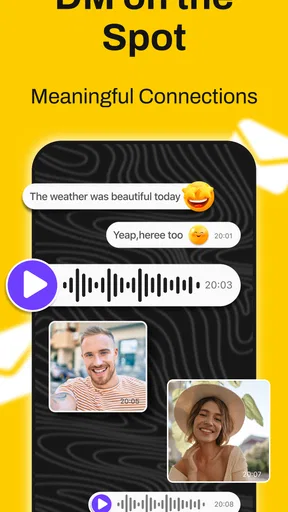


 Analysis by AppCompare
I approached Juds - Random Live Video Chat as a social app for people who want conversations to begin quickly, without building a profile or waiting for an existing circle to respond. My overall impression is fairly clear: it is most appealing when you want spontaneous face-to-face contact, but it demands more patience and caution than a conventional messaging app. The experience is less about maintaining a polished social identity and more about deciding, moment by moment, whether a new conversation feels worth continuing.
That distinction matters. Juds is not the app I would choose for keeping up with family, organizing a group, or having a carefully planned call. I see it as a lightweight meeting point for random live video conversations. When the right interaction appears, the immediacy can be refreshing. When it does not, the same randomness can make the app feel repetitive or uncomfortable. My recommendation is therefore positive but specific: try it if you genuinely enjoy meeting unfamiliar people on camera, and skip it if you prefer predictable contacts and strong control over who can reach you.
How the live-chat experience feels in everyday use
The central idea is easy to understand. You open the app, enter a social environment built around live video, and look for a connection with someone you do not already know. That removes much of the setup associated with traditional social networks. There is no need to spend a long time composing a public profile before discovering whether the service is useful to you.
In practice, I found that the value depends heavily on your mood and timing. If I had a few free minutes and wanted a casual conversation, the directness worked in Juds’ favor. It felt more immediate than posting a message and waiting for a reply. On the other hand, a random video encounter gives you less context than a conversation with a friend or a match based on detailed interests. You have to make a quick judgment from the interaction itself.
A realistic use case is a quiet evening when you have finished your usual messages but still want a little human contact. Juds can fill that gap more naturally than scrolling through a feed. I would open it with a modest expectation: perhaps one pleasant conversation rather than a guaranteed stream of memorable people. That mindset makes the random format feel like an option instead of a promise.
The app belongs to the social category, and its focus is clearly live video chat rather than text-first networking. That changes how I would use it in public. A text application can be checked discreetly on a train or during a short break. A live video service needs a suitable setting, enough privacy to speak comfortably, and a willingness to appear on camera. Those practical requirements are easy to overlook when a store description makes the concept sound effortless.
I also recommend treating the first few sessions as a test of fit. Notice whether you enjoy the pace, whether the people you encounter match your expectations, and whether you are comfortable ending conversations quickly. If you feel pressured to stay on a call simply because it has started, the format may not suit you. The ability to leave an uninteresting or uncomfortable interaction is more important than trying to make every connection work.
Worth Reading Before You Choose

EA SPORTS FC Mobile 26 Is a Bigger Football Game, but It Takes Time

Flipboard Shows What News Apps Must Do Beyond the Feed

Switching to Android Auto Means Rethinking Your Driving Routine

Google Calendar Makes a Crowded Week Easier to Manage

Ludo King Makes the Most of the Minutes Between Plans

Baby Panda World Brings Quick Play to Modern Phones, but Its Game Library Feels Busy
What makes the format more engaging than ordinary messaging
Video creates information that text cannot provide. A person’s tone, pauses, and reactions can make a short exchange feel more natural, while a dry text thread may never develop. For users who find endless typing tiring, Juds offers a more direct route to conversation. I can understand why the app has attracted a substantial audience: its appeal is immediate, and the basic purpose is easy to grasp.
There is also a useful sense of discovery. Because the service is built around random encounters, you are not limited to people already connected to your accounts. That can be a welcome change from social platforms where the same contacts, topics, and recommendations appear repeatedly. The trade-off is that discovery is not the same as compatibility. The surprise is part of the attraction, but it is also the source of much of the friction.
For someone practicing casual conversation in another language, the live format may be more useful than silent study, provided the other person is willing to chat respectfully. Likewise, a person who has recently moved and wants low-pressure social contact may appreciate the chance to speak with strangers without first joining a formal group. I would not treat it as a replacement for local communities or dependable friendships, but it can be a small first step toward being more socially active.
One practical tip is to decide in advance what kind of interaction you are willing to have. If you want only a brief chat, keep that boundary clear in your own mind and leave when the conversation stops being comfortable. If you are open to longer conversations, choose a quiet place and use the app when you can give the other person your attention. The quality of a live exchange suffers when you are distracted, rushing, or trying to use the service in a setting where speaking is awkward.
Where Juds fits among familiar social alternatives
Compared with ordinary messaging apps, Juds offers more immediacy and less predictability. Messaging is better when you need a record of the conversation, want to answer later, or already know the person. Juds is better suited to the moment when you want a live exchange without arranging one in advance.
Compared with profile-driven dating or friendship services, it appears less dependent on carefully presenting yourself before anything happens. That can feel liberating for people who dislike polishing photos and biographies. It also means you receive less information before deciding whether to engage. If your priority is filtering by age, interests, location, or lifestyle, a more structured service will probably serve you better.
Compared with large social networks, the experience is narrower but more focused. You are not opening Juds primarily to browse a broad feed, follow public figures, or manage a long-term online identity. The app’s strength is the live encounter itself. Its weakness is that the surrounding sense of continuity may be less important than it is on platforms built around persistent profiles and communities.
That comparison leads to a useful rule: choose Juds for spontaneity, messaging for reliability, and structured matching services for deliberate selection. None of those approaches is automatically superior. The right choice depends on whether you want surprise, familiarity, or control before the conversation begins.
Important limitations before you commit time to it
The biggest weakness is inherent in the random format. Not every encounter will be interesting, respectful, or worth the effort of starting a video conversation. A live call can also feel more demanding than a text exchange because you are visible and expected to react immediately. Someone who enjoys browsing quietly may find the pressure of real-time interaction tiring.
The mature audience classification is another reason I would not recommend treating the app casually for younger users. It is marked for people aged seventeen and above, so families should pay attention to that boundary rather than assuming that a simple social interface is suitable for everyone. Adults should still use common sense about what they reveal and how quickly they trust a stranger on camera.
Privacy is especially important in a random video environment. I would avoid showing documents, house numbers, workplace details, school information, or anything else that identifies where I am. I would also keep conversations away from financial details and personal account information. These are not complicated precautions, but they are more important here than in a text-only service because the camera can reveal background details unintentionally.
Another point to consider is emotional energy. A poor conversation can leave a stronger impression than an ignored message because it happens face to face. If several encounters in a row feel disappointing, I would close the app rather than forcing myself to keep searching. The random model rewards selective use; it does not need to become a daily obligation.
The free price makes trying the app straightforward, but optional purchases range from less than a dollar to nearly a hundred dollars per item. I would be careful with that range. Before buying anything, I would identify exactly what it changes in my own experience and set a spending limit. A free download can still become expensive if curiosity turns into repeated impulse purchases, so I would not spend simply because a conversation was disappointing.
There is also a compatibility consideration. The current version is 1.3.2.4, and the app requires Android 6.0 or later. That makes it accessible to a broad range of Android devices, but an older phone may still provide a less comfortable video experience than a recent handset. Camera quality, microphone behavior, battery condition, and connection stability can all affect a live call even when the app itself opens normally. I would test it at home before relying on it while traveling.
Metaspeed Ltd. is the developer behind the app. Juds has reached more than a million installs and holds an average rating of 4.5 from roughly thirteen thousand ratings, which suggests that many people find the concept worthwhile. I treat those figures as a useful signal rather than a guarantee. Random social apps can produce very different experiences depending on the people available at a given time, personal expectations, and how carefully the user handles boundaries.
Small habits that improve the experience
I would begin with a short session rather than leaving the app open indefinitely. This helps answer the most important question quickly: do I actually enjoy random video contact? It also prevents the search for a better conversation from becoming aimless scrolling. If the first few interactions are not promising, taking a break is more sensible than assuming the next one must be better.
Lighting and background matter more than many new users expect. A quiet, well-lit place makes it easier to communicate and reduces the chance of exposing private details behind you. I would position the phone so that the camera shows as little of my surroundings as necessary. That is a simple workflow improvement, but it makes live social apps feel more intentional and less intrusive.
I would also prepare a few neutral opening topics. Asking about hobbies, music, films, travel, or the other person’s day gives the conversation somewhere to go without immediately demanding personal information. If the exchange remains one-sided, I would end it politely. Random video chat works best when both people contribute; trying to rescue every silent call wastes time and can create unnecessary discomfort.
Finally, I would separate curiosity from trust. A friendly stranger can still be a stranger. I would not move a conversation to another service, share private contact details, or agree to meet in person simply because a short call went well. The app can introduce people, but it cannot establish someone’s character for you. That judgment remains the user’s responsibility.
Who should use it and who should choose something else
I think Juds is a reasonable choice for adults who like spontaneous conversation, are comfortable appearing on camera, and can handle an uneven stream of interactions. It may suit someone who feels bored with passive feeds and wants social contact that requires an actual response. It is also a better fit for users who view random meetings as entertainment or practice rather than as a guaranteed path to friendship.
I would recommend it less strongly to people who need a dependable way to reach known contacts. If your goal is a family call, a work discussion, or a conversation that must happen at a particular time, use a service designed around invitations and established connections. Juds’ unpredictability is precisely what makes it interesting, but that same quality makes it unsuitable for important communication.
I would also steer away from it if you dislike being judged quickly on camera, have limited privacy at home, or find it difficult to end conversations. A text-based community may offer a gentler pace. A profile-based service may be preferable if you want to review shared interests before speaking. Choosing a different tool in those situations is not a failure of Juds; it simply means the app’s main design choice does not match your needs.
For cautious newcomers, I suggest starting with the free experience and observing your own comfort rather than purchasing anything immediately. Pay attention to whether the conversations feel enjoyable, whether you can maintain boundaries, and whether the app fits naturally into your routine. The free entry point is enough to decide whether the format suits you before optional purchases become part of the decision.
My final view after weighing the trade-offs
Juds succeeds because it removes ceremony from meeting people online. I can move from curiosity to a live conversation quickly, and that directness gives the app a character that ordinary social feeds do not have. Its strongest moments come when two people are genuinely open to a brief, relaxed exchange and neither expects the app to manufacture an instant friendship.
Its limitations are just as real. Random video chat offers less control than structured alternatives, can be tiring when encounters are poor, and requires more attention to privacy than casual browsing. The mature age label and broad range of optional purchase prices also mean I would approach it deliberately rather than handing it to a younger user or spending without a clear reason.
My verdict is that Juds is worth trying for the right person, especially someone seeking spontaneous live contact rather than a permanent social network. I would keep expectations modest, use it in a private setting, protect personal information, and leave conversations that feel wrong. The app is at its best as a short, intentional doorway to unexpected conversation—not as a substitute for trusted relationships. If that sounds appealing, the free download makes experimentation easy; if you want control, continuity, or predictable contacts, a conventional messaging or profile-based social app will be the better recommendation.
Pros
- Quickly matches you with people for spontaneous video conversations.
- Simple interface makes starting a live chat easy for new users.
- Useful for meeting people beyond your local social circle.
- Video interaction can feel more personal than text-based chat.
- Short sessions make it easy to leave conversations that feel uncomfortable.
Cons
- The quality of conversations depends heavily on the random match.
- You may encounter inappropriate behavior or unwanted camera content.
- A reliable internet connection is essential for smooth video calls.
- Privacy can be a concern when sharing your face with strangers.
- Frequent matching may become repetitive after extended use.
FAQs for Juds - Random Live Video Chat
What is Juds - Random Live Video Chat?
Juds - Random Live Video Chat is a social communication app designed for meeting new people through random video conversations. After creating or accessing an account, users can be matched with other participants for live, face-to-face chats. The experience is intended to be spontaneous, although the people you meet, conversation quality, and available features may vary depending on your location, age settings, connection, and current user activity.
Is Juds - Random Live Video Chat free to use?
The app may be available to download at no initial cost, but some functions can depend on in-app purchases, credits, subscriptions, or other paid options. Before starting regular conversations, check the current pricing and subscription details shown in the app store and inside Juds. Also review renewal terms carefully, because deleting the application does not necessarily cancel an active subscription managed through Google Play or the App Store.
Is Juds safe for meeting strangers online?
Random video chat always involves interacting with people you do not know, so users should avoid sharing private information such as their address, phone number, passwords, financial details, or workplace. Use the app’s blocking and reporting tools whenever someone behaves aggressively, sends inappropriate content, or pressures you to continue communicating elsewhere. Parents should also check the app’s age rating and supervise younger users where appropriate.
What do I need to use Juds for video chatting?
You generally need a compatible Android or iOS device, an internet connection, and permission for the application to access the camera and microphone. A stable Wi-Fi or mobile-data connection can make conversations smoother and reduce interruptions. You may also need to create an account or provide basic profile information. If the camera or microphone does not work, check system permissions, app updates, and your device settings.
Can I control who I talk to or stop a conversation on Juds?
Random matching means you may not be able to choose every person before a conversation begins, but you can normally end a chat if it becomes uncomfortable or uninteresting. Look for options to skip, disconnect, block, or report users during or after a session. Do not feel obligated to remain in a conversation, and keep in mind that availability of specific controls may change with app updates or regional versions.


